

Five essentials of conversion copy
Write clear, credible copy that answers customer questions and sets honest expectations for the next step.

Conversion copy helps someone understand an offer and decide whether to take the next step. Its job is not to make every sentence sound persuasive; it is to remove uncertainty with relevant, credible information.
Know the customer and the decision
Before writing, identify the reader's situation, the question they are trying to answer and the action the page or message supports. Use customer research, sales questions and service feedback rather than inventing a persona from assumptions.
Clarify what makes the offer useful and what evidence supports it. A good description for a first-time visitor may be different from the information an existing customer needs to renew.
Use clear, specific language
Prefer familiar words and concrete benefits. Replace a vague promise such as “transform your business” with an explanation of what changes and for whom. Remove adjectives that do not add information.
Concise does not always mean short. A complex purchase may need detailed explanations, qualifications and examples. The goal is to make the necessary information easy to understand, not to remove it to fit a predetermined word count.
Read sentences aloud. If the wording feels awkward to say, it may also be difficult to read. Check spelling, punctuation and consistent terminology across the journey.
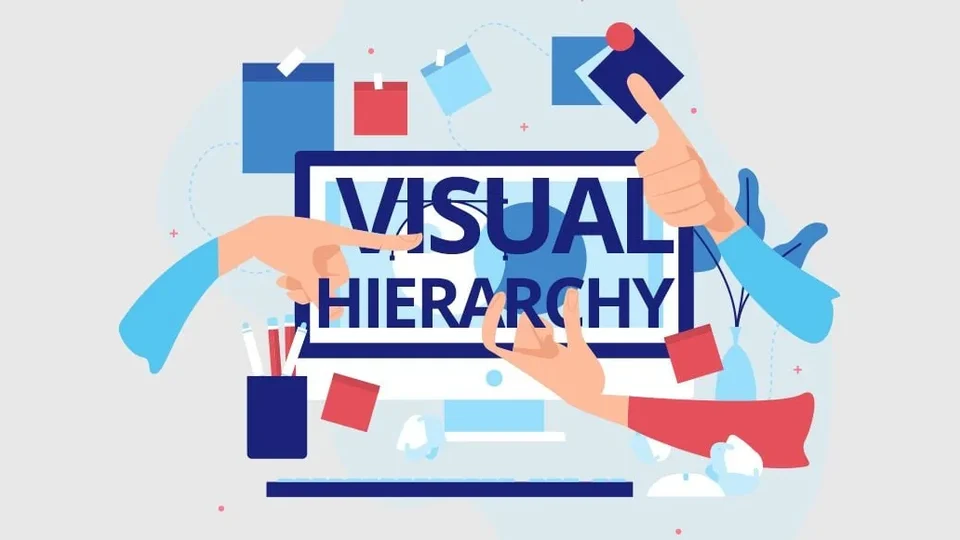
Give the information a useful hierarchy
A headline should explain the subject or offer. Supporting text should help the reader understand its relevance, and the evidence should answer likely doubts. Use meaningful headings, lists and whitespace to make that structure easy to scan.
Work with design rather than dropping copy into a finished layout. Important conditions should not become tiny text simply because the main visual has already been approved. The visual-hierarchy guide explains how layout and language cooperate.
Make each action an honest promise
A button labelled “Book a consultation” should lead to a booking or clearly explain the request process. If the action sends an enquiry and someone will respond later, make that expectation understandable.
Use action labels that distinguish different destinations. “Read the case study”, “Explore services” and “Send enquiry” tell the reader more than repeating “Learn more” everywhere.
Avoid pressure created by invented deadlines, unsupported scarcity or claims the business cannot demonstrate. Trust lost after a click is not recovered by a higher click-through rate.
Review the complete journey
Check that the advertisement, landing page, form and confirmation use compatible language. A promise of a simple consultation should not turn into an unexplained application or purchase flow.
Evaluate copy with the people it is intended to help. Research can reveal misunderstanding; an appropriately designed experiment can test a specific change when there is sufficient traffic and a meaningful outcome.
Clear copy gives the customer enough confidence to act and enough information to choose appropriately. That is a stronger foundation for conversion than making every line louder.

What would you like to achieve?
Tell us what you want to change. We’ll help you find the right starting point.